I N order to be a superhero it seems there are two prerequisites – the ability to perform spectacular feats and anonymity.
The first is self-evident – I mean, derr, if you can’t perform spectacular feats the interview is over. But the need for anonymity is an enigma. Sure, it is obviously convenient. The last thing you need when you’re a busy superhero is your “Bat Phone” running 24/7 with cries for help from people who really are just too lazy or stupid to solve their own problems.
However, “convenience” does not completely explain the mystery. There is something fundamental about superheros that shields them from public gaze. It appears to be linked to the suppression of ego and lack of charisma. In fact they tend to be anti-egotists – introverts.
Now I know what you're thinking – Batman, Superman, introverts? Have you seen their costumes, you dick?
But these flamboyant vigilantes aren’t real superheros, they’re fictional characters. They are caricatures of superheros created by egotists.
Egotists depict superheros as narcissists who feel somehow compelled to at least try to conceal their insatiable need to be the centre of attention. Hence their outrageous garb tends to include a mask. Like a string bikini, it’s a faint flag of modesty fluttering in a gale of rampant exhibitionism.
Real superheros don’t need masks or costumes, because they are actually invisible.
I discovered their existence quite by accident when I stumbled over the keys to their camouflage. When I peered behind their curtain I was astonished by what I found. Their influence permeates every facet of our modern life. I suddenly realised just how dependant we mortals are on them. They are continuously performing spectacular feats, day-in day-out right in front of our faces and yet we just can’t see them.
We walk by, oblivious, humming to the tune on our ipod.
They are everywhere, controlling our lives. They regularly hold mass meetings right in the middle of our capital cities where they honour esteemed members and bestow awards for magnificence, but I guarantee you won’t read a word about it in the newspapers or hear a mention on the television.
By some mysterious conjuring, they have induced a somnolent, narcotic effect on the community – their camouflage cloaks their activities no matter how spectacular or astounding.
We called for their help recently when the earthquake and tsunami hit Japan crippling the nuclear power stations, and when BP’s Macondo well exploded in the Gulf of Mexico, when floods and cyclones ravaged Australia in 2010 and an earthquake shattered Christchurch.
So powerful is their magic that when I expose their identity their spell will immediately kick in. You will be overcome first with a sense of disappointment. Feeling let-down you will not notice the veil quietly closing as your attention is diverted elsewhere and they drift back into invisibility.
These superheros are our engineers.
Throughout history, engineers performing spectacular feats have transformed the human race from a tribe of clever monkeys who poked sticks into holes to get the ants out into what we are today. It’s a process that continues at an ever-accelerating pace – yet how many of us could name just three of them?
It was engineers who built the pyramids, the Acropolis, the Roman aqueducts, the Great Wall of China, the steam engine, the combustion engine, aeroplanes, spacecraft. It was engineers who moved vast armies across theatres of war and delivered the devastating ordinance that changed the political course of history.
Yet when we think back over all these events, or read the historic literature, there is not a lot to recall these engineers. As a society we focus on the egotists – the charismatic political leaders, generals, admirals, or decorated heroes.
“We shall fight on the beaches, we shall fight on the landing grounds, we shall fight in the fields and in the streets, we shall fight in the hills; we shall never surrender...” What was implied by Churchill but never stated was: “Exactly how we will achieve all this will be up to the engineers.”
“I believe that this nation should commit itself to achieving the goal, before this decade is out, of landing a man on the Moon and returning him safely to the Earth." Again the missing quote: “Exactly how we will get there and back will be up to our engineers.”
We know who went to the Moon, we know who sent them, but who knows who got them there and back?
Every time we get behind the wheel of a car, step on to a train or a plane or into an elevator, or drive over a bridge we put our lives into the hands of these superheros with their algorithms.
Fictional Hollywood superheros have bi-polar personas. One is the charismatic, gaudy exhibitionist who uses super powers to save the world in spectacular fashion. The other is the opposite – a nerdy, introverted character who blends into the community with a bland, everybody camouflage, shunning like kryponite the limelight that we egotists bask in.
This logic would suggest that for a real superhero trying to blend into Hollywood, the modern egotists’ Holy See, these poles would be reversed.
Consider Hedy Lamarr – here’s a superhero who disguised herself as an egotistic megastar in tinsel town. Feted as “the most beautiful woman in the world”, her adoring fans were oblivious to the superhero who was busy trying to save the world and who had a hand in changing the future course of mankind. In the dark days of World War II, Lamarr applied her covert electronic engineering skills along with a Hollywood neighbour, avant-garde composer George Antheil, to design something they knew the US Navy desperately wanted – a secure torpedo guidance system.
However, their frequency hopping communications design, US Patent 2,292,387, was ahead of the electronics technology of the day and so it did not see service during that war.
It first saw action 20 years later when the heat was turned up to boiling in the Cold War. During the Cuban Missile Crisis, as the world and the human race moved towards the brink of destruction, the Lamarr-Atheil anti-eavesdropping technology was used by the US Navy to develop secure communications between its ships, blockading Cuba.
The Lamarr-Atheil spread-spectrum communications system, originally based on the idea of synchronised pianola reels, lies behind a range of modern secure wireless communications applications in systems from US defence satellites, to radio transmissions, to mobile phones.
Lamarr helped save life on earth, including mankind, from destruction, yet managed to avoid being named along with other Hollywood egotists Oprah Winfrey, Marilyn Monroe and Lucille Ball on Time Magazine’s list of The 100 Most Important People of the 20th Century. Instead Lamarr is remembered for her beauty – and for being the first woman to get her tits out in a feature film.
So how exactly did she do it? (Remain invisible that is – not get her tits out.) How do these engineers so effectively hide their activities? How do they construct mammoth buildings, fly millions of people around the world, tunnel beneath our cities, put a man on the Moon, wrap the globe in an instant-communications network, span vast waterways with dangling steel without ever really being noticed? Given that drunken pop stars can have their faces splashed across news outlets around the world just by falling down outside a nightclub, or swearing at a photographer.
A s I said, I think I have discovered the secret to the engineers’ powers of invisibility – it’s the pencils they use. Those seemingly stupid little retractable pencils that look like pens. Only engineers, or people who think like engineers, can use these pencils. If an egotist like me tries we keep breaking the lead until we fling the contraption at the wall in frustration. My father was an engineer.
As a child I recall how he used to correct my maths homework using his stupid retractable pencil. I was never any good at maths. When forced to do my homework, I would sit gazing blankly at the hostile sums my teacher set and try to remember a morsel of what she said in class.
But nothing would come. Instead my mind would wander off to some distant imaginary land where whatever I was doing would make me a superhero and the centre of everyone’s admiration.
Then my father, knowing I was making no progress, would fold his newspaper and place it on the coffee table and come over to help me. He would take his magic pencil out of his shirt pocket. “These sums aren’t that hard,” he would say while pressing the button on the end and focussing on getting it just right before releasing the button, closing the tiny jaws around the protruding lead.
“All you have to remember is that ...” After dragging me back from my imaginary land where everything I did was magnificent, he would then humiliate me by doing each of my equations with his pencil asking me questions along the way like “what’s 13 minus four?” I would look blank.
“13 minus four?”
Silence.
“Surely you know what 13 minus four is!?”
What he didn’t realise was that whatever the question, I couldn’t hear it. Instead all my mind was processing was the situation of me sitting here being tested and judged by my father and failing on every count.
He would just persist doing my equations in the margin of my exercise book. His sums and his process didn’t match my teacher’s in any way. But surprisingly his answers were always right.
“That’s not how WE do it,” I would feebly suggest. “We use New Maths.”
“Maths, is maths, however you do it,” he would say before leaving me ashamed, as he went back to reading his paper.
My father never talked about his work.
With his slide rule, theodolite and magic pencil he changed the lives of many people in the UK, Africa and Australia. These people are not aware of his role in their lives. Engineers don’t cut the ribbon when their work is done.
In Nigeria he built roads and bridges. This was a time when there was very little infrastructure in the country. He had to improvise on a lot of the services taken for granted in a modern, developed country – services such as ready-mixed concrete. My father had to mix his own concrete for the bridges and culverts on site with local labourers. He was constantly getting out his little pencil and adjusting the formulas of the mix in order to prevent cracking in the piles under the variable wet and dry tropical conditions.
“How are the piles going Peter?” the other expats would joke back at the club, suggesting he may have had an unspeakable medical condition.
When an engineer constructs an all-weather road to an otherwise remote town or village they profoundly change the outlook of that society and its people forever. The same goes for connecting communities to the electricity grid, train network, gas or water supply, sewerage or even broadband internet. But rarely are we who live in these communities aware of who these engineers are or of the incredible feats they have to perform and the perplexing problems they have to overcome in order to get us what we take for granted.
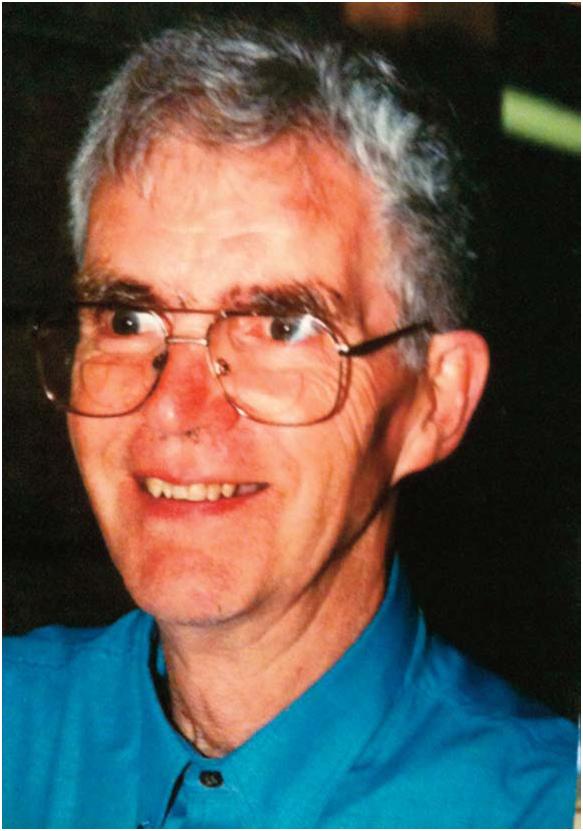
My father, Peadar, with my mother, Nadia, at one of his work sites in Nigeria. When an engineer constructs an all-weather road to an otherwise remote town or village they profoundly change the outlook of that society and its people forever.
I discovered the powers of the retractable pencil quite by accident not long after the turn of the century. I was working as an “embedded” journalist in a large corporation that was run by, and dominated by, engineers. Their stationery cupboard was full of these pencils disguised as pens. Whenever I presented something I had written for them to review, they would take out their retractable pencils, triggering a visceral flashback to my homework days. They would correct my spelling and grammar and then explain why some of the intuitive conclusions I had cleverly reached were based on flawed assumptions. These engineers were always calm, gracious but never condescending and, like my father, always so infuriatingly bloody right.
I was constantly energising around “brilliant”, innovative ideas only to see them torn to shreds by these quiet engineers with their confounded retractable-pencil logic.
But eventually I grew to enjoy these clashes with logic.
With fellow journalists we could sustain a loud, complex argument for hours, fuelled by beer and what Barry Humphrey’s referred to as the authority of total ignorance. With engineers the energy behind the idea would last for mere moments. It was either a good idea, in which case they would suggest further reading – essentially all those who had developed the same idea down through history – or it defied logic and would fall crashing to the floor like an improvised flying machine.
Gordon was one engineer I particularly loved bouncing things off.
“Gordon, if the laws of physics are sound then everything is predetermined,” I suggested one day. “Molecules have no choice in how they react, their reactions are set. Therefore, at the molecular level, our destiny has been set since the moment of the big bang, just like the destiny of balls on a pool table once you break. True?”
Gordon commended me on coming up with such a big idea, then calmly explained Heisenberg’s “uncertainty principle” and introduced me to the world of quantum mechanics. This caused a brain explosion. I fell down a rabbit hole and met Schrodinger’s Cat, which is not alive or dead, but is alive and dead. Coming from daily newspapers where everything was reduced to a “good yarn”, this confrontation with in-depth logic proved to be quite game changing. I had never had to face such due diligence on everything that I wrote. But after a few years I found this scrutiny reassuring. Delving into the detail of complex technical issues and then trying to find new ways of expressing these concepts in the everyday, emotional language of journalism can be quite an intriguing challenge.
It’s not unlike trying to learn a second language late in life. The hardest part is letting go of assumptions you have grown up with. For example, in English objects are inanimate, whereas in Italian, like French and German, you have to think of them as male or female – boy or girl, masculine or feminine.
It was while studying Italian on a train, travelling from central Victoria into Melbourne that I stumbled across the power of the retractable pencil. I read an Italian phrase that I wanted to remember. Reaching into my coat for my pen I realised that I only had one of those stupid retractable pencils that I had picked up by mistake. After breaking the lead once, I pushed out another tiny bit of lead and tried again, writing ever so gently and carefully: ci penso di quando in quando (I think of it from time to time).
Suddenly I was engulfed in an orgasm of awareness. Everything stopped. While the train continued through the wheat fields at about 160 kmh, I was floating in a sea of stillness.
So this is how they do it. This is how those with a technical mind can create clarity and wonder from what seems to an egotist like me to be a chaotic confusion of tedious facts and figures. This is the power of the retractable pencil – the kinetics of writing. What you write with can have a subtle or profound impact on what you write.
You can’t write thundering columns, angry notes, graffiti or placards with a retractable pencil.
When it comes to jotting down notes at an interview a ballpoint pen is perfect. Keyboards have taken over our written communications – emails, blogs, articles, books. Even thumbs for SMS, chats or tweets.
However, when it comes to dealing with the big issues, the really tough questions, you need a retractable pencil. Intractable dilemmas require retractable pencils.
When the numbers really count: After famously reporting "Houston we have had a problem" Apollo 13 Commander James Lovell reached for his retractable pencil and starting jotting down these sums that would help get his ship safely home from the Moon. When the going gets really tough, those who don't have retractable pencils call those who do.
W hen the going gets really tough, those who don’t have them call those who do.
When your house is on fire you call the fire department. But if a nuclear reactor is on fire we call the engineers. When oil comes spewing out from deep below the ocean, we call the engineers. If you’re lost in the woods you can call emergency rescue. But if you’re lost in space between Earth and the Moon, you call engineers.
Bringing the Apollo 13 astronauts home safely required a team consisting of hundreds of engineers stretching the limits of technology with algorithms, knowledge, lateral thinking and retractable pencils. In many respects this was as great an achievement, if not greater, than the first Moon landing. Controlling the Macondo oil well blowout in the Gulf of Mexico was an engineering feat on the same scale. To hear and read commentators urging our political leaders to step in and takeover the operation shows just how out of touch we egotists have become. It exposes a fundamental flaw in our democratic system – we have a system built on popularity that elevates the loudmouths and shuns the thinkers.
It alienates those deep, introverted thinkers we rely on to solve the big problems. The nice, polite retractable-pencil people whose names you can never quite remember.
We egotists are the communicators, we are the butterflies in the garden. Thinkers tend to live a cloistered existence – geologists talk to geologists, neuroscientists to neuroscientists, engineers to engineers. We ferret them out and expose their work to a wider world. We cross pollinate ideas. This crucial cross fertilization opens the way to new amazing developments that benefit us all. Such as MRI technology used by clinicians for medical diagnostics or geoscientists looking deep into the earth, or the wide-spread, eclectic use of isotope analysis technology.
Necessity may well be the mother of invention, but serendipity is the father.
So what?
Well the fact is, essentially we journalists, we egotists, are failing to fulfil our role in the garden.
As a result we find that at a time when technological advances are opening up new and increasingly complex horizons of knowledge, the gap between scientific knowledge and public perception is widening. We journalists are failing to raise the level of technical understanding in the community and this is seriously hampering our ability to take full advantage of technical advances and is leading to serious public policy mistakes.
We have governments that find it difficult to draft quality, long-term policy decisions in some of our most important areas. For example, trying to site a nuclear waste storage facility anywhere in a democracy will raise a barrage of outrage, fear and misinformation. Not to mention policy paralysis in areas such as genetic engineering, medical research, energy and environmental management.
As a species, we are heading down the road of populism. Rather than enlightening and educating the population, journalists, and as a result politicians, are being drafted into harvesting ignorance and prejudices by promoting what is popular. Experts are brushed aside in favour of opinion polls and focus groups when it comes to determining solutions to some of the most complex problems we have ever faced.
The result is photo-opportunities involving grinning world leaders signing up to future commitments that have no chance of being fulfilled. Commitments such as the Millennium Development Goals, Kyoto and Copenhagen greenhouse gas emission targets, and nuclear non-proliferation treaties.
We egotists are just as important as our scientists and engineers. We are the artists, the musicians, the poets, the chefs, the filmmakers, the politicians, the movie stars. But we need to be aware of what we can do and what we can’t do.
We need more engineers. But we also need James Joyce, Jane Austen and Jimmy Buffett. Egotists make life worth living, engineers make it possible. It's about as hard to love a building designed by an engineer as it is scary to drive over a bridge built by an artist.
The time has come for us egotists to go back to doing what we do best. We have to pick up the “Bat Phone” and call the superheros. The people who are in the best position to do this are the journalists – real journalists.
We are the ones who have to change the public discourse. We have to present more facts and less opinion. We certainly have to resist the urge to seek popular opinions to complex issues. Please don’t ask any more pop singers for their views on climate change or world politics.
The role of the journalist is to narrow the gulf between what is known selectively and what is known collectively.
We have to drag more superheros into the limelight to help raise our overall awareness of what we face on the road ahead and what our realistic options are. We need facts that we can climb up on.
My advice to any journalist who feels they may actually have the answer to any of our big problems is try it out on someone who uses a retractable pencil – find your Gordon.
We all know what needs to be done. We all know the mission. We all know where our “Moon” is. We now need to get behind those with the knowledge to develop the algorithms that will get us there.

 Posts
Posts