Tuesday, June 1, 2010

Why is Australia still waiting for a fast, reliable train?

It’s a sad fact that if you live long enough you will eventually get cancer. And that, I’m afraid, is what has happened to Australia’s railway systems. We have entered the 21st Century with a 19th Century rail system.

Everything about our railways from our rolling stock to the way we treat our passengers is Dickensian. The system has cancer and it’s dying.

Meanwhile rail travel in the rest of the world is enjoying a renaissance, with fast trains competing with airlines for inter-city passengers. They can be faster, they are much more energy efficient and they reduce greenhouse gas emissions.

I’m sitting on a Victorian regional inter-city train listening to the all too familiar barking rage of the conductor blasting a passenger for being late and not having time to buy a ticket at the station. The conductor can sell tickets on the train, but he doesn’t like doing it. Like Basil Fawlty, he is angry because the passengers won’t get their lives organised to suit his agenda.

The “customer service” woman at head-office is totally on side. “Oh I know, we really wish they wouldn’t talk to customers like that. There is absolutely no reason they can’t sell tickets on the train – they have the facilities. It’s just some of them are lazy – it tends to be the ones who live in the city.”

She leaves the impression that this problem is as old as time and there’s not much she can do about it, because it is and she can’t. It’s an infection that has spread into the bones of our rail system. It dates back to the 1800s, the heyday of rail travel when there wasn’t much else. Rail travel was a privilege – but not anymore.

The same sanctimonious conductor who was blasting the passenger for his poor punctuality is now on the PA delivering the ritual, canard apology on behalf of the railway. Today it’s because, even though we have arrived at our destination only 10 minutes late, it will probably be at least another 10 minutes before we will be able to get off the train. You see someone has parked another train in our spot.

It’s the same the next day – different conductor, same apology, same excuse. The fact that most of the 14 platforms are empty at our brand-new metropolitan station doesn’t seem relevant. To allow us off on “another” platform would require a change in “procedure”, some lateral thinking, a morsel of concern.

Day three, same outcome only this time the excuse has changed – it’s that old reliable “signal fault”. You see the fault, the problem, the reason and, therefore, all the responsibility for this terrible recurring situation lies with “the signal”. If only those damned signals would get their act together.

For every awful conductor, ticket seller, ticket inspector on the railways there is one who is polite, courteous, helpful and extremely efficient. Sadly they are swimming against a tide of institutionalised incompetence and inconsistency and a culture of apathy.

To all those Australians who like to brag about how we “punch above our weight” on the world stage, I say take at look at our railways.

My thoughts drift back to a particularly pleasing risotto I had with a fine glass of woody Chardonnay in an exquisite restaurant in France almost 10 years ago – and bear in mind I’m a risotto purist. In this restaurant the waiting service was impeccable, the table decorations were pleasant, the wine list, although a tad limited, nevertheless included only quality. But what really made this meal special was the view. You see, the restaurant was on Eurostar, travelling through the green fields of France at around 300kmh on its way from Paris to London.

Eurostar today can cover the journey carbon-neutral in a little over two hours, even though for safety reasons it has to slow right down to the speed of the fastest trains in Australia as it travels under the waves of the English Channel.

In Australia we consider 160kmh wow-speed for a train. But in the real world 160kmh was considered fast for steam trains 100 years ago.

Today world-class trains are getting close to the 600kmh mark.

China, which remember is still a developing country, is rolling out fast train lines like spaghetti. It already has the longest fast-train network in the world.

You can now go 968km from Wuhan to Guangzhou in three hours. That’s around the same distance as Melbourne to Sydney, a journey that takes our ambitiously named XPT (Express Passenger Train) over 11 hours.

Shanghai’s 30.5km airport link – that’s around the distance of Melbourne to Tullamarine or Manly to Mascot – takes seven minutes and 20 seconds, with a top speed of 431kmh.

Oh we have tried to join the 20th Century.

Back in the ‘80s some of Australia’s leading companies – BHP, Elders IXL, Kumagai Gumi, and TNT – got together on a bold plan to build a fast-train network linking Melbourne, Canberra, Sydney and Brisbane. When all the sums were done, the investors considered it a goer provided they could get some tax concessions from the Government.

When this was put to the Government, the answer was “computer says no”.

In 2008 a world-class fast train service was proposed for Melbourne’s metropolitan area, running from Geelong right around to Frankston. But once again the answer from government was “computer says no.”

Victoria now has a new Transport Minister, Martin Pakula. After his swearing in January he said: "The public of Victoria expect a public transport minister who’s going to get in, roll his sleeves up, and work as hard as I plan to work, to do everything I can to improve the system as much as possible."

Those in their salad days might take this as a message of hope. But experienced punters will recognise it as the traditional call of the new minister. It’s not so much a statement as a noise they make just before leaning back in their chair and putting their feet up on the desk.

The cure for our rail cancer is simple, brutal, but costless to the community.

All we need to do is bundle up our railways – infrastructure, rails, rolling stock and real estate – and give it to Richard Branson. Just imagine what Virgin Rail would look like in 10 years time. For starters it would have staff who would, to quote from V/Line’s Customer Commandments, “provide friendly personal service and the information I need to make my journey enjoyable”.

So that would mean the end of the historic Barking Conductor Corps. They’d just have to retire and go home to kick their dogs and watch TV.

Friday, April 9, 2010

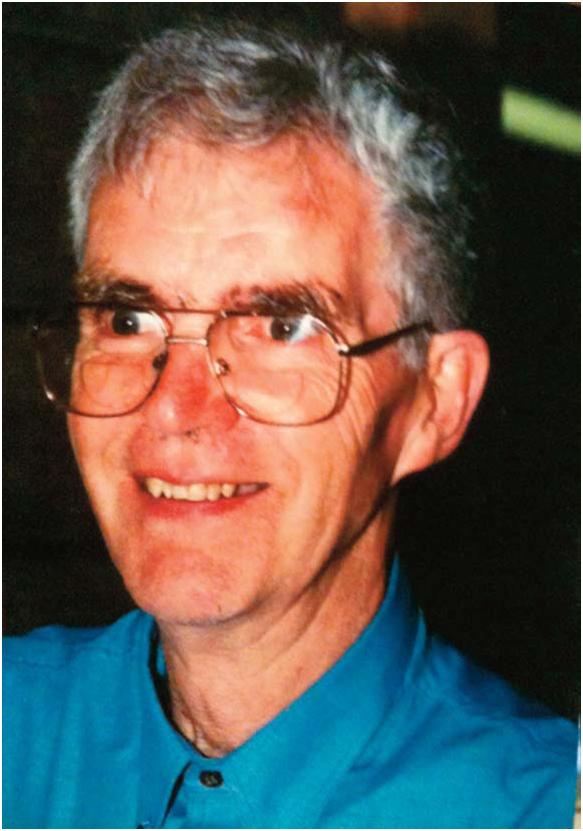
Valē Peadar (Peter) Joseph McDonnell, 1930-2010


Eulogy delivered by his eldest child, Stephen, at St Jude’s, Langwarrin, Australia, April 9, 2010

Some of us are dreamers, we have a fantastic, creative imagination and can believe anything is possible. Dad was an engineer, they’re the ones who turn dreams into reality.

He didn’t have an artistic bone in his body. He dealt in algorithms,

disciplined planning, correct procedures. But at the age of 22 he fell in love with Nadia Cooperman, a dreamer straight from cloud nine.

They were married in London in December 1954 and the magic-carpet ride began.

Dad provided the stability that gave mum the freedom to indulge her imagination.

Peadar (Peter to most) Joseph McDonnell was born in Leenane, Ireland, in October 1930, the 5th of Captain Peadar and Tilly McDonnell’s eight children. The family later moved and settled in nearby Galway, where Dad served out much of his youth and schooling. He continued on to Galway University where he studied Civil Engineering.

He was also mad about sports – Gaelic football, hurling, rugby and rowing; He was selected for the Schoolboy fifteen to represent Connaught against Leinster in the Rugby Interprovincial one year. He also represented Galway Uni in the All Ireland Rowing Championships.

Like his mother and father before him, Dad was a devoted Catholic and in his diary at this time, every entry starts with ‘I went to Mass’.

After graduating he worked in England for the British construction company Wimpy and Co. and the Crown Agents office, seconded from the British Government.

However, adventure and travel was in Dad’s veins. Before long he and his young wife headed off to a life of adventure in Nigeria where the first of his 10 children was born – that would be me. When my sister Katie confronted Dad one day on why he went to Nigeria of all places rather than the more genteel Kenya with its established community of expatriates, he replied: “I fronted up at the civil service office for overseas postings and said you can send me anywhere.”

When an engineer constructs an all-weather road to an otherwise remote community they change the fortunes of the people in that community forever.

With his slide rule and theodolite, and of course his cinecamera, Dad built many roads and bridges connecting communities in Nigeria. These were primitive times, remote from the modern world. There was no ready-mix concrete to call on, nor a phone book of tradesmen to lend a hand. Concrete for piles and struts was mixed and moulded on site using teams of local labourers with improvised facilities. It's a task

that required exceptional innovation and ingenuity. As did the task of raising a young family in a primitive, tropical country, rife with exotic diseases and increasing political turmoil.

Two more children later, Mum and Dad finally left Nigeria just before the British colonial rulers did the same. Another short two-child retreat in England and Ireland our now, family of five children with one on the way, set our sights down under.

Dad must have wondered what he was thinking when he brought his young family to the wilds of the Pearcedale bush surrounded by wildlife and sword grass. There were many failures and triumphs in those early years, like the orchard he planted where the family home now stands, or the failure to catch a wallaby he had by the tail – an event watched repeatedly with much mirth on many a family movie night, or the failure to burn the sword grass, or even the failure to keep our horses fenced

in, none of which deterred Dad. But then there was the triumph of building a limestone house and successfully raising a family of 10 kids. A family I knew Dad was very proud of.

Many would agree that mum ruled the roost but Dad always had

the final word.

Dad continued his career providing utilities for the community. First it was water with the State Rivers and Water Supply and then it was homes for those who needed them most with the Victorian Housing Commission.

As I mentioned, Dad was deeply religious and caring and gave much to the community and asked for nothing in return – unless you happened to be eating some chocolate around him.

He was always a very active member of his parish. When St Marys Primary School needed some new classrooms Dad did the drawings and supervised the building work. When Hastings Parish needed a church, Hall for Pearcedale Dad once again did the drawings and plans and helped in the building work. You can always tell Dad's churches, they're the ones that look like they were designed by an engineer.

Dad was one of the founding members of the St Vincent De Paul Society here at St Judes attending regular meetings to help out the needy and the poor of the Parish.

There is no question that Dad touched the lives of so many people in Africa, England, Ireland and Australia through his work. And there is no doubt that most of them would not be aware of who he is or what he has done. He never talked about his work or himself. We had to do quite a bit of research so we could tell you what he actually did at work all these years.

He was not one of those married to his career – he was married to Mum and his family. At home with his kids, that's where Dad really lived.

He was a very quiet, gentle and caring man, but never-the-less there was a side to Dad that would surprise many. For example, his adventurous, fearless spirit.

It must have come as a great shock to Mum when he took on the gruelling Murray River Marathon with some of his sons. Ironic that by the same river I was playing Nigerian rhythms on Congo drums at the Down to Earth Festival. Or the time he agreed to accompany Rory on a flight in a light plane to Queensland and back. Rory had just got his pilot's licence and was keen to give it a try. Or the time he went hunting razorbacks on the banks of the Lachlan River. Not with guns – with dogs and knives.

Dad was never a horseman, but his daredevil spirit compelled him to occasionally saunter out to one of the children on a horse declaring it was his turn. On one such occasion, at the age of 55 the spirited horse took off and dumped our poor Dad, leaving him with a punctured lung, six broken ribs and a broken collarbone. He never got on a horse again.

His strength and belief in standing up for what was right came out in unusual ways.

Like the time Mum opened an antique shop in Frankston when Joanne, her youngest, started school. With no allocated parking space and surrounded by two-hour parking zones, Mum had a constant barrage of parking fines which she would occasionally appease with a cheque. Fed up, she went to the police station and demanded all outstanding fines which she would pay, and did. When, in the next few weeks another summons came for some fines they had missed, Dad said “Enough”. He would go to jail rather than pay another cent. Off he went with his book under his arm to the Dandenong lock up. Mum was in the shop that day. She rang home to see what was needed. Jackie answered: “We need milk and bread – and Dad’s in jail”.

Around 1975 when I was working in the city, dad suggested we both do a public speaking course the Knights of the Southern Cross were running, to help me overcome my fear of public speaking.

Dad introduced us to current affairs and British comedy. News and AM in the morning on the way to school, PM in the evening then This Day Tonight, Monday Conference, Point of View with Bob Santamaria and the comedies, At Last the 1948 Show, The Frost Report, Monty Python and others.

Another surprising side of Dad was his eclectic taste in literature – He was never without a book but also read his Catechism, The Catholic Advocate, The Nation Review, National Times, and how can we forget, Harry Potter. In recent years, no book was safe. When visiting his children, he would take any book he happened to find handy. Often frustrating when he disappeared with the book you had nearly finished.

Dad’s legacies to his children and grandchildren are many. Like his father before him, he always had a camera and we have home movies going back to the early days in Africa. He was always a playful tease, delighting those around him with the ‘whiskers kiss’, 'Gee Up a Guppolin', his constant urge to tickle, and tease, particularly the dreaded ‘horse-bite knee tickle’.

Many of you that knew Dad realised that his mind was deteriorating over the past few years and deteriorating rather exponentially. Even though he knew us all and his cherished grandchildren, 32 in all, this period has been punctuated by some rather comic and bizarre behaviour, too numerous to mention here. But when family members would continually lose their keys only to find them clutched firmly in dads right hand after a frantic search we really started to worry.

Dad never had a bad word for anyone. He had a genuine love for everybody he met and he had the ability to make everyone feel special and welcome.

Barrister John Styring captured this perfectly in a tribute he sent to Sally. He wrote:

"I have the fondest memory of Peter sitting in a comfortable chair in your log cabin just across from the open fire, cradling a baby, and smiling at me with a look of utter contentment. There was great noise and movement in the cabin, but for Peter, it was just him, the baby, and by his smile, me."

His Grandson Oscar – also grandson of his best friend in Galway, Mossy Power – said it all when asked by his father “Do you want to be a doctor like me when you grow up”, he answered: "When I grow up I want to be just like Grandpa."

We all miss you so terribly, Dad.

Tuesday, October 6, 2009

We can measure our way to 'la dolce vita'

From the 27th to the 30th of this month (October) global experts will gather in Busan, Korea, for the OECD World Forum. Although this event has much greater potential for influencing the future of the world than the Copenhagen Conference on climate change, it has been all but ignored by the world’s media.

Every key player and informed commentator knows that at best Copenhagen will result in a lot of politicians making well-meaning promises they can’t keep – just like Kyoto.

Busan, on the other hand, is about getting results. It’s about the “Global Project on ‘Measuring the Progress of Societies’- hosted by the OECD and run in collaboration with other international and regional partners - it seeks to become the world wide reference point for those who wish to measure, and assess the progress of their societies”.

It’s a cause that has been embraced by French President Nicolas Sarkozy to his credit.

But his initiative has largely been treated with ridicule by the media. Knowing the media as I do, this is not surprising. What is been attempted at Busan is way outside the popular media’s vocabulary.

Our journalists are far-more at home with the finger-pointing, accusations, arguments and emotional rhetoric generated by climate change. This sells papers. Results-driven constructive initiatives like the OECD’s Global Project, or the UN’s Millennium Development Goals, just don’t have anything to offer the media. They lack the strong emotions the media needs to attract customers like you and me.

Tracking effective measurements is one of the most powerful means of bringing about change. I once asked an engineer how he had achieved such remarkable results in improving the energy efficiency and reducing the greenhouse emissions from his industrial plant. He said it was just a result of measuring and tracking theses parameters of our business. “Once we established benchmarks and then tracked our progress as part of our everyday business, the plant operators starting finding all sorts of ways to reduce energy waste,” he said.

This is what the OECD, as well as credible organisations around the world, have been doing for years. But they will never achieve their full potential until they are adopted by the mainstream media.

We do it for anything to do with money, such as share markets, GDP, consumer sentiment, but if it does not relate directly to money we ignore it.

The media goes into a frenzy whenever interest rates move. Here in Australia, particularly since the last election, we saw all sorts of claims and accusations about which party, Liberal Coalition, or Labor, were best at keeping interest rates low.

But do interest rates really present a credible measure of a government’s worth? The merits of debating levels of interest rates under Liberal or Labor leadership is so spurious given the impact of international factors on Australia’s economy.

And anyway, Governments are not just elected to steer the economy – we are a society not just an economy.

According to pioneering sociologist Emile Durkheim, it’s another issue floating around in the public debate lately that is a much more accurate measure of the health of a society than money – it’s suicide.

Durkheim believed that the only true way to gain empirical evidence of our society’s health and wellbeing was by counting how many of us decide to check-out early.

So how do our historic Liberal and Labor Governments go on suicide rates?

According to the World Health Organisation, it’s the Liberals who hold the record for suicide rates in Australia. But not just any Liberal Government, it’s the Liberal Party’s icon, Sir Robert Menzies. He managed to increase the suicide rate by an astounding 37.6 percent to almost 15 per 100,000 people – an all-time record – in a decade and a half of Government.

Most remarkably he managed to increase women’s suicide rate into unprecedented double figures by the mid-‘60s.

Between 1950 and 1965 our female suicide rate went from 4.7 per 100,000 to 10.8, climaxing with an astonishing 42.6 percent increase in the first five years of the swinging ‘60s.

What could have happened to create such a dramatic spike? Looking at the statistics from a high altitude you could not miss the fact that this was a period of tremendous social change in the role of women. This was the epicentre of women’s liberation as they burned their bras and came out of the kitchen and into the workforce.

Does this mean that many of our mums and daughters chose to put their heads in the oven rather than leave the confines of the kitchen?

A quick look through Wikipedia reveals that in January 1961 The Pill went on sale in Australia, April 1964 saw Melbourne woman Judy Hanrahan appointed as the first female teller in the Bank of NSW since the War. In the same month Menzies refused to ratify the International Labor Organisation convention on equal pay for women.

As our suicide rates neared their peak, Donald Horne published The Lucky Country. But then, coincidentally after Sydney’s Philip St Theatre staged its famous comedy revue, A Cup Of Tea, A Bex and A Good Lie Down, the tide turned. Menzies handed the reins over to Harold Holt and female suicide rates began to decline. However, it wasn’t until 2003, with John Howard as PM, that they returned to their 1950 rate of 4.7.

There is no question that according to Durkheim’s measure, the Age of Aquarius, peace and free love was not a happy time. As our society lifted her skirts and let down her hair, and the beautiful people indulged in drugs and sex and rock and roll, women in the English-speaking world were killing themselves in record numbers. But it has to be said that the UK and US rate for women never came close to our double figures.

Our rate for men, on the other hand, lives in double figures.

The title for achieving the highest suicide rate for men goes to Labor icon Bob Hawke. In 1990 it hit an unprecedented 20.7 per 100,000. This was just as the country was heading into Treasurer Keating’s “recession we had to have”.

Durkheim’s mission over a century ago was to find uncompromised data to measure and study social trends, because our intuition is often very misleading.

For example, we like to think of ourselves as “the greatest little country on earth” – land of beautiful beaches, sunshine and “she’ll be right mate”. So then how come, according to the OECD, our suicide rate is nearly twice that of those “whinging”,” whining” Poms?

Sociology has come a long way since Durkheim’s day. We now have a wide range of sophisticated measures such as Cantril-ladder-type questionnaires to test how we’re doing as a society. But, as I said earlier, for some reason we choose to ignore them unless they are linked to money.

Experts agree that suicide rates and the epidemic of depression that has been sweeping the post-war industrial world seems to be linked to breakdowns in social cohesion. In short, it has to do with the “ME” generation. Anything we can do to turn our “ME” upside down to make a “WE” society will improve our outlook and reduce our suicides.

In the past communities grew around a cathedral, synagogue, temple or a mosque. Today we worship the bourse. Our daily news outlets report on the Dow Jones Index, the FTSE, the Nasdaq, the Hang Seng, the Nikkei, the All Ordinaries, the S&P, CPI, GDP, the dollar etc, etc, etc.

As Robert Kennedy said in 1968 – ironically, as American women were killing themselves in record numbers – we measure “everything, in short, except that which makes life worthwhile”. Three months later he was shot dead.

So the 3rd OECD World Forum on “Statistics, Knowledge and Policy” (October 27-30) will feature its Global Project on "Measuring the Progress of Societies". Although it has been embraced by President Sarkozy who is developing a measurement template “for every interested country or group of countries” for now it looks like the world media’s attention is elsewhere.

However, the success or failure of these initiatives – and therefore our success or failure in achieving our goals including tackling climate change – will depend on the media.

So come-on editors and producers, step away for the sheep and start making real progress.

Here is a sample of some of the human-factor measures you can choose from. They are all tried and tested.

This is only a few and each of these have links to many more.

If we are serious about winning the "War on Terror", if we are serious about building a better world for our children and grandchildren, then we will measure the things that matter most and we will report the results along with the weather, the stock market trends and the value of the dollar in our newspapers and on the evening news.

Saturday, August 22, 2009

A Peony’s Progress

The year I was born a fellow traveller, or Sputnik to use the Russian word, also began this journey.

I was whisked off to Africa in my first few months on Earth, while Sputnik was launched into orbit.

As I sprouted I began to wonder what I would be when I grew up.

Would I be like my father, or would I be Daniel Boone.

Once I thought I would win Wimbledon, when I got around to it. But that didn’t happen.

I tried being a navvy, but I fell into a pile of newspapers.

So I thought I was a journalist. While this seemed okay, it just wasn’t quite there.

But finally my bud burst and Sputnik delivered the truth.

When he headed towards the stars, he kindled a flame of insecurity over in America.

As a result the United States formed the Advanced Research Projects Agency, or ARPA, in order to regain the lead in the rocket race. ARPA created the technology that later led to the Internet, so that John Brockman could launch a website on its Edge to introduce me to Katinka Matson who had a mirror in which I could see my true self at last – I’m a peony.

Tuesday, July 21, 2009

Journalists Are Being Taken For Fools Over Energy

Something is missing from the Rudd Government’s energy policies – energy.

We have a lot of theories, plans, committees, voluminous reports, good intentions and ambitious targets, but we don’t have a credible plan for supplying the energy we will need in coming years to maintain our economy.

The fault here lies not just with the Government, but with us in the media.

We in the media have to take responsibility for the fact that, when it comes to energy, the public’s perception has become totally detached from reality. Our politicians, in order to remain popular, have been forced to present two faces – one for mainstream journalists and the public and the other for the energy industry.

When speaking to the former they present beads and trinkets – or more accurately, propellers and mirrors. Yet when speaking to the energy industry they are at pains to demonstrate that they haven’t lost the ball.

Take for example the mixed messaging coming out Canberra on renewable energy. The public’s perception of renewable energy is essentially wind, solar and biofuels – energy that is widely believed to be clean, green, available and the way of the future.

However, this is not the reality. To quote the Government’s own energy experts at ABARE: “Australian production of renewable energy is dominated by bagasse (sugar cane waste), wood and wood waste, and hydroelectricity, which combined accounted for 86 per cent of renewable energy production in 2006-07. Wind, solar and biofuels (which include landfill and sewage gas) accounted for the remainder of Australia’s renewable energy production.”

Few people outside the energy industry will hear government spokespeople explaining that we get most of our renewable energy from damming rivers and burning forests.

Whenever politicians – Labour, Coalition, or Greens – talk about renewable energy, they love to highlight solar. That’s the one we all love. That’s the one we really want to be the answer. “We should use the sun's power to stop blackouts, instead of causing them,” thundered The Age’s editorial during last summer’s heatwave (2 February 2009).

But sadly today’s solar technology suffers from fundamental flaws in terms of cost, scale and reliability. The only solar energy running in urban areas anywhere in the world is there because it’s subsidised – governments are paying for it because the people want it.

The Rudd Government’s energy experts again: “Most solar energy is used for residential water heating and this represents less than 1 per cent of final energy consumption in the residential sector.”

We are facing a major crisis in providing for our future energy needs, while our politicians engage in feckless arguments about targets and schemes. Kevin Rudd is driving energy policy merrily towards a tree like Mr Magoo. The Greens are angry because he’s not going fast enough while the media commentators just bark at the tyres.

We really need journalists to shine a light on what’s really happening. But in order for that to happen we journalists must first stop being advocates. When it comes to complex technical issues like energy we don’t have the answers – we are the communicators. Our readers, viewers, listeners rely on us to break down the complex technical information and translate it into simple concepts that they can understand.

Right now the debate is dominated by the beliefs and opinions of politicians, academics, economists, scientists, financial market analysts, industry leaders, and journalists. Each brings important input into the deliberations. However, they are all essentially theorists. We are hearing very little from the pragmatists – the engineers.

It’s the absence of engineers from the debate that has resulted in our energy policies failing to take the curve on the way towards tackling climate change.

Scientists have done an excellent job in identifying where we have to get to. But our political leaders have designed a path forward without adequate input from the engineers. Yet it’s our engineers who will have to do the heavy lifting in getting us there.

Our current energy policies are based on wishes, and dreams, assumptions and beliefs. But the fact is, no matter how strong your mandate, no matter how large your majority, no matter how well-meaning your intentions, you can’t legislate to change the laws of thermodynamics.

The Governments has introduced legislation increasing the Mandatory Renewable Energy Target (MRET) and it has bipartisan support. However, the Greens don’t think it goes far enough.

So let’s do the maths.

The legislation says we will get 20 per cent of our electricity from renewable energy by 2020. The Government’s forecast says we will need 1258 petajoules (PJ) of electricity per year by 2020, bearing in mind that one petajoule is the energy equivalent of 29 million litres of petrol.

At 20 percent, that means we will require 251.6 PJ of renewable power generation in about 10 years time. We currently deliver about 92 PJ – 63 PJ of which is hydro-electricity.

Hydro’s growth is limited, in fact it has been decreasing, which is not surprising given the state of our water supplies in the hydro areas.

But let’s put it down for the projected 68 PJ the Government says we will get by 2020. That leaves 183.6 PJ to come. There are new technologies on the horizon, wave, geothermal and hot-rocks, but they are, to quote Minister Penny Wong, “yet to be developed”.

According to the Government’s forecasts wind will increase by 1 PJ to 16 PJ in 2020, biomass (that’s wood) will almost double to 15 PJ and biogas (gas from tips and landfills) will rise to 7 PJ. So that leaves 145.6 PJ of renewable energy we will have to find to meet our MRET target.

What about solar?

We have all, no doubt, heard about Australia’s ambitious plan to lead the world into a solar future. We have the much-heralded plan to build the world’s largest and most efficient photovoltaic power plant in Victoria. If we succeed, this one plant will provide more than twice the amount of solar electricity we get from all the solar panels and plants currently installed across the nation. That will reduce our 145.6 PJ target by 1 PJ. So if we throw in our current solar industry we can call it an even 144 PJ we will still require.

In the May Budget, the Rudd Government announced its ambitious $1.6 billion Solar Flagship Program. “The Solar Flagship Program is expected to comprise up to four solar power stations operating within the energy market, with a total capacity of 1000MW.”

If they succeed, and remember they need private investment to take the total to over $4 billion, they will add an amazing 6.6 PJ.

So on the Government’s own figures and forecasts we are currently 138 PJ short on meeting its MRET target. This shortfall would require 138 more of the “world’s biggest” solar photovoltaic plants, and at current costs that would be more than $55 billion. Or perhaps we could find somewhere to put an extra 2484 square kilometres of wind-turbines.

Major energy infrastructure projects can typically take 10 years from concept to completion so we need to be starting this right now to deliver the energy in 2020.

Never forget that this 138 PJ shortfall is just to meet our MRET target. We are not talking about finding an alternative to fossil fuels here. These numbers assume that we meet all our energy efficiency targets and that fossil fuels can increase their annual output by 225 PJ.

These foolish targets lead to absurd consequences like Australia and America exporting wood to Europe (WSJ, July 8) to burn in coal-fired power plants in order to meet the EU’s absurd 20 percent renewable quota.

So as our politicians are out there bragging about their targets, where are all the journalists asking them to explain where the energy is going to come from? Are they, for example, planning on burning down more forests? Or perhaps they want to revisit the Gordon-Franklin hydro scheme now that we have Bass Link tying Tasmania’s electricity to the mainland.

Far from grilling the Government on these basic fundamentals, we have many intelligent, rational journalists, academics and politicians seriously suggesting that we should extend this shortfall by replacing coal-fired generation with renewable energy.

Just for the record, that would make the missing 138 PJ grow to 988 PJ.

To give you some idea of the complexities of the energy industry, let’s look at the aluminium industry. Our wind turbines and the towers they sit on are made from aluminium. If we wanted to power only our aluminium smelters from wind it would require more than 2000 square kilometres of wind turbines. That’s the equivalent of a wind-farm one kilometre wide stretching from Melbourne out way beyond Brisbane.

To attempt this, of course, would create a significant increase in demand for aluminium, which in turn would require more power and therefore more wind turbines etc, etc, etc.

This is why we really need to draw more engineers into this debate. They are the ones trained to deal with these practicalities. Engineers tend to be more doers than talkers, which probably explains why so few of them go into politics.

However, 2009 is the 90th Anniversary of the Australian Institute of Engineers and maybe we can make this the year we started to change all that.

If we are going to make any serious progress in the global challenge of meeting the world’s energy needs while tackling climate change we are going to have to hear more from our engineers. And we in the media are going to have to resist the urge to advocate and go back to asking the fundamental questions.

Friday, June 12, 2009

The Solar Energy Mirage

I have a torch at home that doesn’t need batteries yet never runs out of electricity. It is made from durable plastics and inside has a copper coil with a loose magnet that slides back and forward through the coil when you shake the torch.

It transforms the chemical energy stored in my muscles (and fat) into electrical energy that allows me to see in the dark. How amazing is that?

But this wonderful, perpetual, renewable energy source is not the answer to all my energy problems. It has not led me to unplug my house from the power grid, tear up my electricity bills and throw my car keys over the fence.

The solar energy industry is in the same position as my torch. It’s also an amazing, wonderful source of energy when it is used in the right situations, such as locations far from conventional electricity infrastructure, like in the outback, or powering the remote-control systems on gas platforms out in the South China Sea. But it is not the answer to the world’s energy problems and it won’t be in my lifetime and probably the lifetime of anyone reading this article.

Solar’s problem is the economics don’t add up. For example, we all dream of having cars that run on solar power. Yet if I produced such a car today, I would find it hard to sell. It would be ideal as a summer beach patrol vehicle, but it would never cut it as the family sedan. We need our cars day and night, rain, hail or shine and very few people can afford the capital expense of a second car just to use on sunny days.

These are the same problems with solar power generators – they are expensive and unreliable.

That’s why almost all the solar energy in our urban areas is there because it’s on the dole – whether that's in Australia, Germany or California. It’s paid for by taxpayers’ money, because our politicians are forced to pander to the misconceptions of the community. The community wants solar energy to be the answer to all our energy needs, so our politicians are very keen to give it to them. That’s why there is so much fuss about Environment Minister Peter Garrett’s axing of the solar rebate.

Meanwhile the real energy problems are mounting up – and they are formidable problems.

There are three fundamental principles that govern the energy industry – how much, how much and timing. How much energy can you deliver? How much will it cost? When can you deliver it? Scale, cost and timing.

These crucial principles are ignored by many who speak out on energy issues and as a result the general public has naive, impossible expectations based on a grossly distorted picture of the energy market.

Timing is important to understand because the energy industry runs on very different time-lines to the political election cycles that have such an influence on our policy decisions.

Our whole way of life, our quality of life, is determined by our access to energy. Wow betide the Government if our daily energy supply is curtailed in anyway, or if the cost of that energy goes up dramatically. We saw an example of this with the spike in petrol costs last year and the power outages in the Victorian heatwave.

But the energy we rely on today – to keep our milk and chops cold, to run our lights, air conditioners and tellies, and to get to and from work and pick up the kids – is the result of major capital investments in energy infrastructure five, 10, 20, even 30 years ago. If our energy system fails, chances are that's not down to the current Energy Minister, Martin Fergurson, it's more likely to be thanks to his predecessor or his predecessor's predecessors. In the same way our children and even our grandchildren will be relying on the energy investments we make today, under the current Rudd Government.

The problem is that in the current economic climate investment capital is very hard to come by. On top of all this, according to the Government's ABARE forecasts, our future generations are going to rely on a lot more energy than we are currently using, just as we today are using a lot more than our parents' did.

Which brings me to the scale of the problem.

Twenty years ago Australians consumed about 4000 petajoules (4000PJ) of energy per annum. Bearing in mind that one PJ is the energy equivalent of about 29 million litres of petrol. Today we demand about 6000PJ. According to Australian Bureau of Agriculture and Resource Economics (ABARE), if we become far more fuel efficient and implement our fuel conservation measures, we will require a bit more than 8000PJ in 20 years time.

So how much does solar contribute? Of the 6000PJ we consume today, solar energy contributes about 3PJ. I’ll write that again in case you think it’s a misprint. Solar contributes about 3PJ. This is almost entirely made up of the energy produced by all the solar hot-water heaters across the nation.

According to ABARE’s forecasts that figure is going to grow rapidly over the next 20 years to 4PJ. Meanwhile our annual demand will increase by 2000PJ over the same time.

The fact is the greatest responsibility for meeting our energy needs while at the same time cutting our greenhouse gas emissions falls heavily on the shoulders of the scientists, engineers, technicians and operators in the fossil fuel industry, who provide about 95 per cent of our energy. Without them we haven’t got a chance.

Slandering these dedicated individuals as “big polluters” or part of the “Carbon Mafia”, and comparing their organisations to tobacco companies just makes the task of recruiting the crucial next generation of young minds to this mammoth task so much harder.

Saturday, January 10, 2009

Climate Change versus Poverty Alleviation

The world is playing tug-of-war with itself at the moment. At one end of the rope is the climate change industry, at the other end is world poverty. The arena is the world’s media and the winner is the cause that can attract the most media attention.

So far the climate change industry is winning hands down. It has proven to be spectacularly successful at playing the media game.

It’s so successful in fact it has even seduced some of the world’s leading anti-poverty campaigners, such as Oxfam, World Vision and Unicef, to come over and pull for its side.

In its Policy Position on Climate Change, World Vision Australia declares that it is prepared to refuse funds for the world’s poor in the interests of supporting its climate change policy. It states that it “will decline offers of funds, goods-in-kind, or services-in-kind from companies” that it believes do not support its position on climate change.

Frankly I find this deeply disturbing. It is an alarming sign of today’s omnipotent media.

As the UN IPCC makes clear, climate change is a very real problem. But it's not the only real problem. That fact that it is so pervasive in today’s news is a credit to its spin doctors.

There is no question that our daily news industry is of vital importance to a healthy democracy, but it is not the font of knowledge that some believe it to be. News organizations are in the business of selling stories. As Evelyn Waugh put it in Scoop, it's only news until it's read – "after that it's dead”. So good spinners know that the same message has to be constantly renewed – "more urgent", "more dire" – in order to make it into the papers.

The most important news doesn’t always make it into the daily media – the best stories do.

Tomorrow there will be a catastrophic international incident that will kill more than 20,000 children. The reason they will die is because the doctors and the ambulances will be too late in getting to them. But that's not news, because it also happened yesterday, and again today – in fact it happens every day, including Christmas and holidays.

Not one of these children will be killed by climate change. Their biggest cause of death is pneumonia, followed by other easily treatable conditions including diarrhea, malaria and malnutrition.

Ending world poverty is urgent – tackling climate change is important, but not urgent.

The good news is that progress is being made. According to UN Millennium Development Goal 2007 Report, the proportion of people living in extreme poverty in the world fell from nearly a third to less than one fifth between 1990 and 2004. As a result the Millennium Goal of halving the number of people living in extreme poverty by 2015 is likely to be met.

Unfortunately this progress is almost entirely due to the rapid economic expansion in Asia, most obviously China. China is eradicating its poverty and raising living standards the same way we did in the West, by burning fossil fuels. As a result its CO2 emissions are projected to be greater than those of Europe and the US combined in the next quarter of a century. China is big enough and powerful enough to politely tell Western climate change lobbyists to get stuffed. Yes, it recognizes that reducing emissions is important, but it has made it clear that economic growth comes first.

Low-cost, high-yield energy brought us the industrial revolution. This did not just give us what we have today in our modern world, it formed who we are.

As neuroscientist Professor Susan Greenfield points out in The Quest for Identity in the 21st Century, it changed us from "a cog in the machine of a feudal society" into the free-thinking individuals we are today. It made each of us "Someone". When manual labor became more mechanized, we got more leisure time to just think. At the same time the new manufacturing age was "desperate to draw on diverse types of individual talents". This, of course, sparked the need for education and innovation and before you know it, here we are.

Well now it's time for the Third World.

But this won’t happen without the low-cost, high-yield fossil fuel energy we rely on. Yet some in the climate change industry say developing countries should instead be encouraged to adopt high-cost, low-yield renewable energy. Make no mistake about it, to push this line is to pull the rope away from poverty alleviation.

The industrial revolution unlocked our brain power. Education of the masses delivered brilliant scientists, doctors and engineers who rapidly improved our technology and standard of living. But most of our human brain power is still locked away in the Third World struggling just to survive. 

Climate change is a global issue and a personal one. It's not a national issue – it can't be solved by politicians or corporations. It's up to us. We the consumers are the big polluters.

The only effective way to unite the world behind this cause is to adopt a long-term global per-capita target.

Then we work hard to get ourselves down to that target, but more importantly, we work hard to get everyone in the developing world up to that target.

One of the most significant factors driving global emissions growth is population growth. History has proven that as living standards increase birth rates decline.

The major global issues plaguing the world today – climate change, terrorism and poverty – are all linked.

Who knows, the person capable of providing a vital clue to our search for low-cost, high-yield sustainable energy technology could be toiling away today in some field in Africa.

Our challenge is to get her through school and into a university urgently.